A Board Meant to Be Used
Long before charcuterie became a word we used casually, boards like these already existed. They weren’t made for display. They were made because people needed a solid surface to cut bread, slice meat, serve food, and gather around a table.
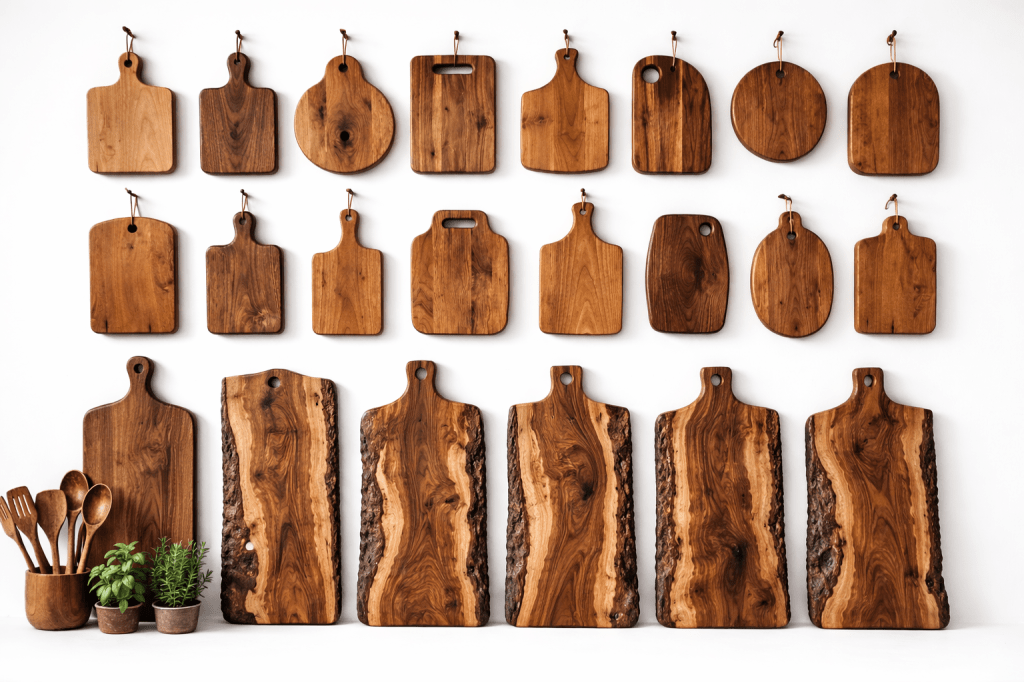
char·cu·te·rie: (French: from chair, meaning “flesh,” and cuit, meaning “cooked”)
Originally, charcuterie referred to the preparation and preservation of meats, sausages, pâtés, terrines, and hams. This was practical work, born of necessity. Meat had to last through winter, and skill mattered.
Over time, the word grew beyond the work itself and began to describe how that food was shared. Cured meats laid out with bread, cheese, fruit, and simple accompaniments, arranged with care. The board became part of the ritual.
What hasn’t changed is the role of the board. It still anchors the gathering.
Boards Then and Now
Historically, boards were made from whatever wood was available locally. Oak, walnut, beech, maple. They were split from the log, not milled flat and fast, then shaped by hand. Tool marks were expected. Grain, knots, and movement told the story of the tree.
No two boards were ever the same, because no two trees were ever the same.
Today, we use a range of boards, each serving a different purpose.
Cheese Boards
Cheese boards are typically lighter and flatter, designed for presentation rather than heavy cutting. They emphasize serving and sharing, often finished smooth and refined, meant to hold cheeses, fruit, and accompaniments.
Cutting Boards
Cutting boards are work pieces. Built for knives and daily use, they tend to be thicker and more utilitarian. These boards earn their marks honestly and show wear as part of their life.
Serving Boards
Serving boards sit between function and presentation. They are sturdy enough to carry food confidently, yet refined enough to stay on the table. This is where many modern charcuterie boards live.
Charcuterie Boards
A true charcuterie board draws from all three traditions. It must be strong, stable, and generous in size. It should carry weight, both physically and visually. These boards are meant to hold the center of the table and invite people to gather.
Some include handles for ease of carrying. Others keep a simpler form, closer to the old slabs of wood that inspired them. Neither is more correct than the other. They simply serve different hands and different homes.
The Boards I Make
The boards I make live firmly in the charcuterie and serving tradition.
I offer two.
Centurion Walnut Charcuterie Board
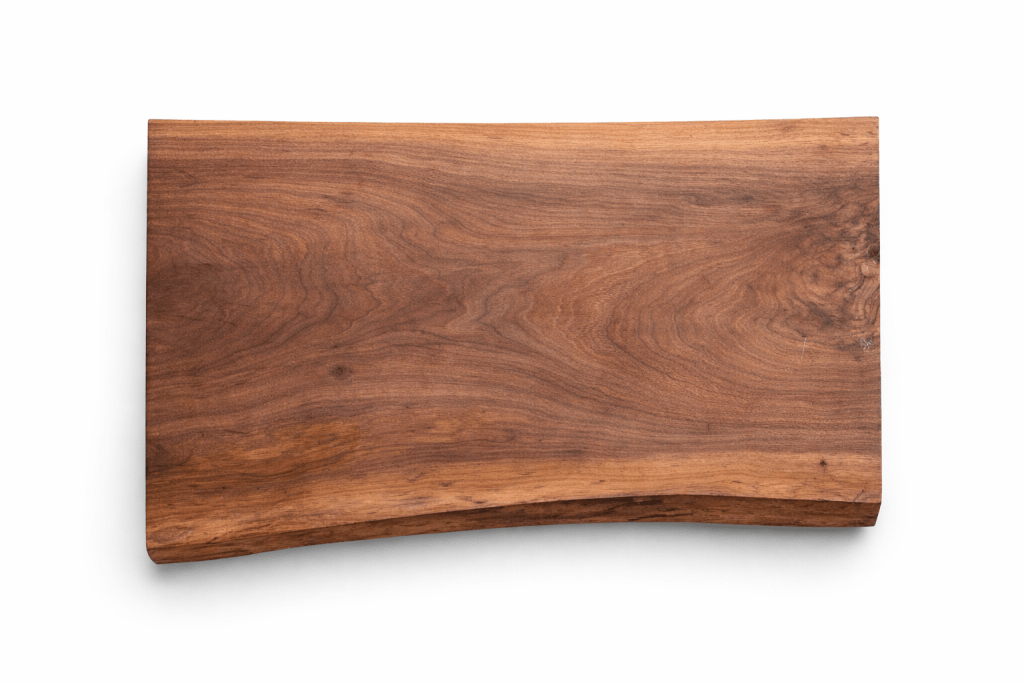
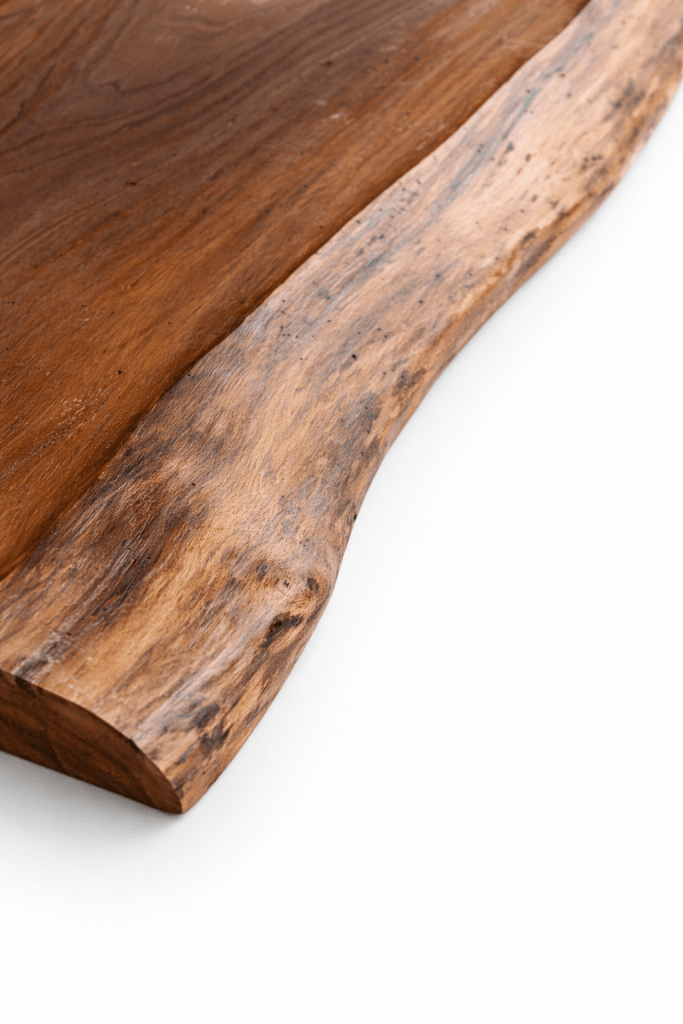
The first is a full-sized walnut board. This is a statement piece. Walnut has a depth and warmth that draws you in. The grain moves in its own way, shaped by years of growth you can still see and feel. No two walnut boards are ever alike, and each one carries its own character and story forward.
This board measures :
23½″ L × 10″ W × 1½″ thick and weighs a substantial 10 lbs.
Garry Oak Serving Tray, Chip Dimpled Surface
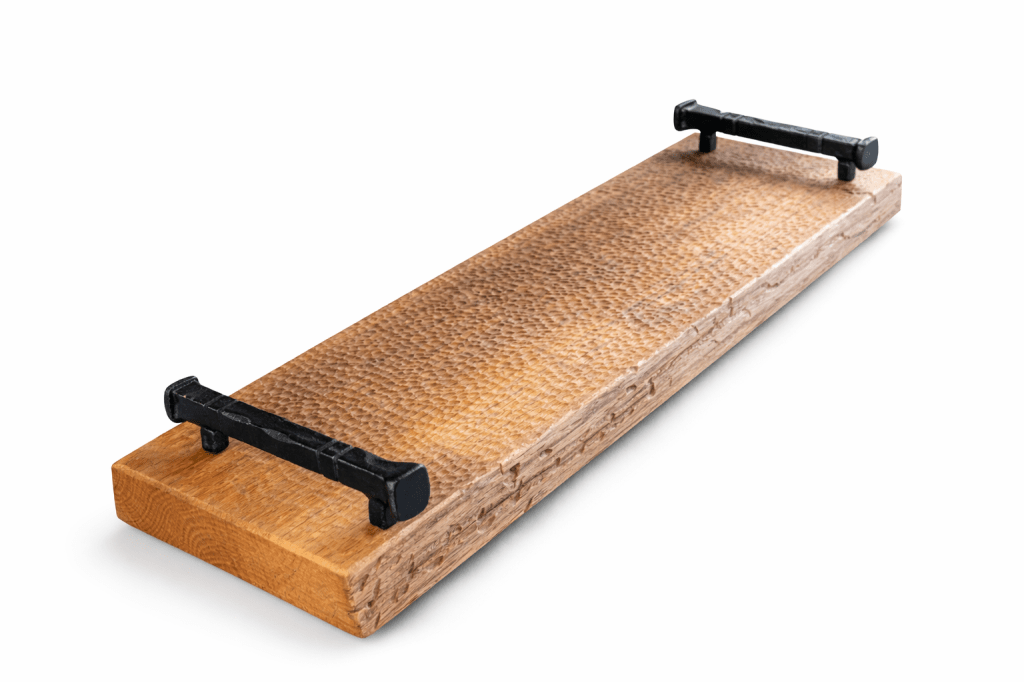
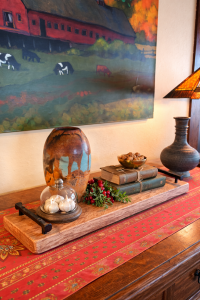
The second is a smaller oak board with more visible character. Oak is honest wood. Strong, open-grained, and full of movement. Knots, rays, and shifts in color are part of its voice. These boards often show more of the tree’s history, making each one distinctly its own.
This board measures:
23½″ L × 5″ W × 1″ thick
Both boards can be made with or without handles. Handles add ease for carrying and serving. Without them, the form stays closer to the older tradition. That choice is personal.
How They’re Made
These boards begin as split wood, not factory-cut lumber. Splitting follows the grain rather than fighting it. That matters. It respects the structure of the tree and preserves the story already written inside it.
From there, everything is shaped by hand. I use hand planes and cabinet scrapers, the same tools woodworkers relied on long before electricity entered the shop. There’s no sanding to erase the process. The surface is brought to smoothness slowly, deliberately, until the wood tells you it’s done.
To preserve and protect the wood, each board is finished with pure, food-grade tung oil. It penetrates the wood rather than sitting on top of it, offering protection while allowing the grain, structure, and history of the board to remain fully visible. It’s safe for food, durable in use, and easy to refresh over time.
Makers’ marks remain. The structure of the wood remains. The small irregularities remain. They aren’t flaws. They’re evidence that this board was shaped by hand, from a specific tree, at a specific moment in time.
Made to Be Used, Made to Be Kept
These boards are made for practical use. They can carry food, be washed, dried, and used again.
But they’re also made to stay. To age. To gather stories of their own. To be passed down, carrying not only the marks of the maker, but the life they’ve lived in your home.
Wood remembers how it was shaped. And every board remembers where it came from.
That’s what I’m offering here. Not just a board, but a one-of-a-kind piece of a much older conversation between people, wood, and the table where we gather.
Visit the SHOP page to order yours.

 Larry Wood, Traditional Woodworker
Leave a comment