Long before the Windsor chair became a familiar piece of American furniture, it had a rather different purpose.
It was a garden chair.
In early eighteenth-century England, Windsor chairs were popular on country estates. They were relatively lightweight, easy to move about, and often painted green to blend into their surroundings.
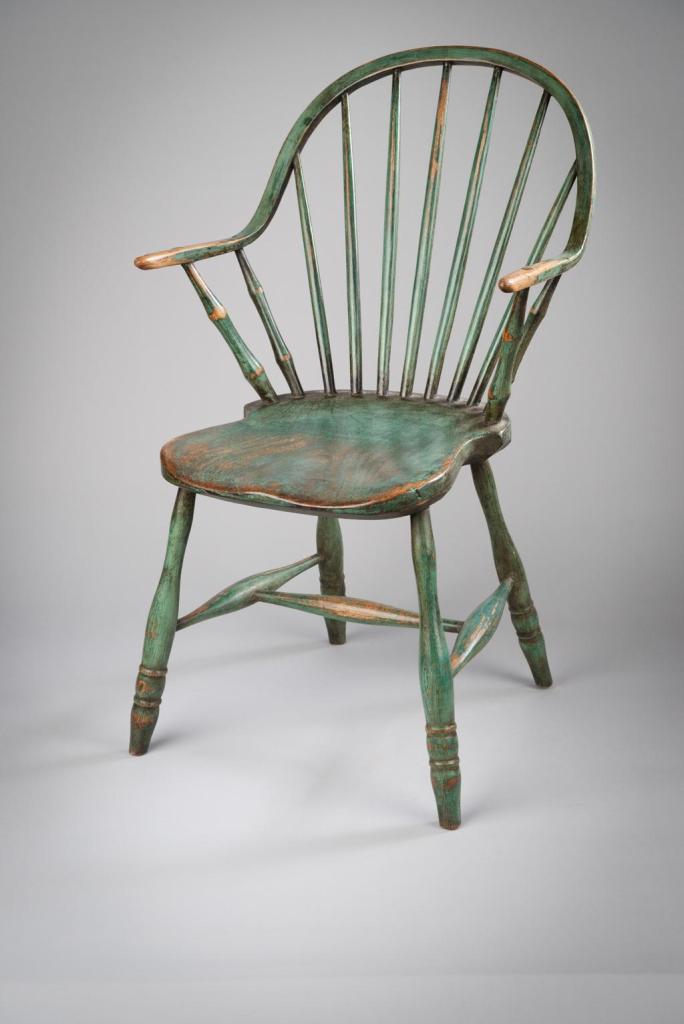
Some were even known as Forest chairs.
It’s interesting to think that a chair we now associate with American kitchens and fireplaces may have started out beneath the trees of an English garden.
AN ENGLISH CHAIR BECOMES AN AMERICAN ORIGINAL
The Windsor chair crossed the Atlantic during colonial times, and by the 1740s, Philadelphia had become an important center of American Windsor chairmaking.
American craftsmen weren’t content to simply copy the English designs. They experimented with different woods, proportions, turnings, and construction methods.
Over time, distinct regional styles developed. A Philadelphia chair might look quite different from one made in New England.
Those differences are still interesting to study today. The shape of a spindle, the turning of a leg, or the curve of an arm can tell us something about the craftsman who made it and the traditions he followed.
A SEAT AT THE BIRTH OF A NATION
One of my favorite bits of Windsor chair history concerns the First Continental Congress.
In 1773, Philadelphia chairmaker Joseph Henzey supplied Windsor chairs for Carpenters’ Hall.
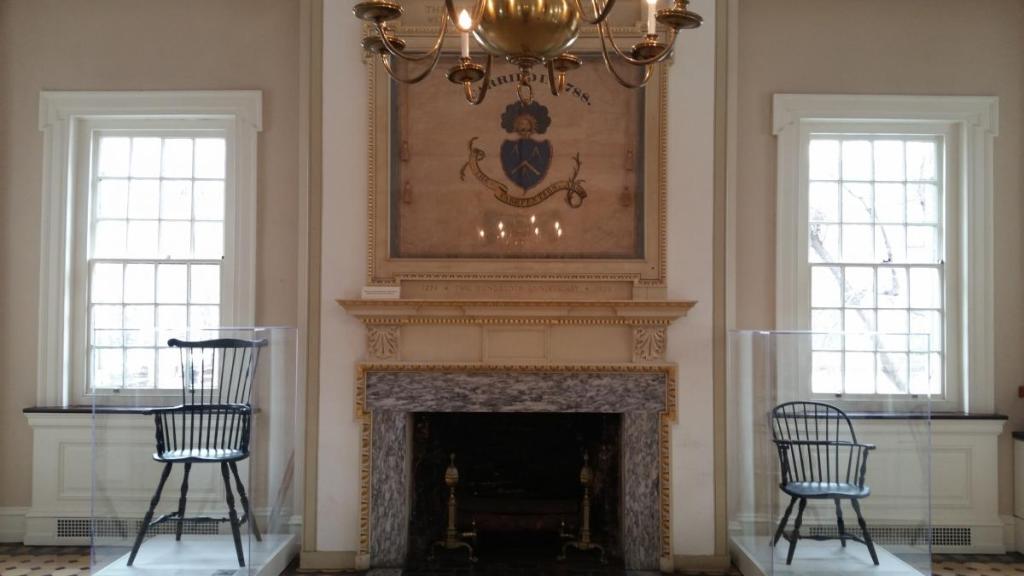
The following year, delegates gathered there for the First Continental Congress, sitting in chairs made by a local craftsman.
Some of those original chairs have survived.
Imagine that. A fellow going about his ordinary work, shaping wood and fitting joints, never knowing his chairs would become part of American history.
More than 250 years later, we’re still talking about them.
SOME THINGS HAVEN’T CHANGED MUCH
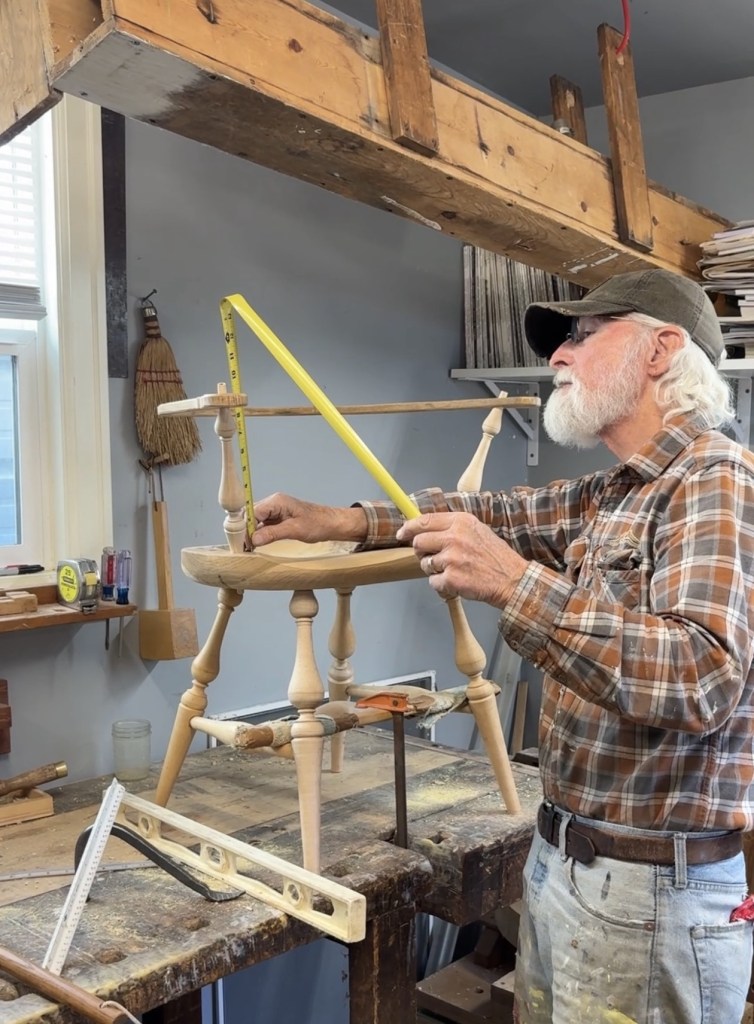
I sometimes wonder what those early chairmakers would think if they walked into my shop today.
They’d certainly notice a few differences, but I suspect they’d recognize much of the work.
There’s still wood to shape, a seat to carve, holes to bore, and joints to fit. The angles have to be right, the chair needs to be comfortable, and all those individual pieces have to come together properly.
That’s what I enjoy about traditional Windsor chairmaking.
There’s always something to learn, even from a chair made two hundred years ago.
And while the tools and techniques have evolved, the satisfaction of making a good chair with your own hands probably hasn’t changed much at all.
A FEW MORE CHAIRS TO MAKE
I’m pleased to share that I’ll be ready to begin accepting new Windsor chair orders in March 2027.
If you’ve been thinking about having a chair made, now would be a good time to let me know. I’ll be putting together a list of folks who are interested, and we can discuss styles and details when the time comes. Fill out the contact form with your details and I’ll reach out!
Since each chair is made individually, there’s only so much work I can take on.
It’s a good feeling to know that a craft with such a long history still has a place in our homes today.
And I’m looking forward to doing my small part to keep that tradition going.

Historical References
For readers interested in learning more about the history and craftsmanship of Windsor chairs, the following resources offer some fascinating insights:
- Regional Furniture Society: The Windsor Chair, exploring its English origins and development.
- Carpenters’ Hall, Philadelphia: The history of the Windsor chairs associated with the First Continental Congress.
- Colonial Society of Massachusetts: Windsor Furniture Making in Boston, examining the development of American regional chairmaking traditions.


Leave a Reply